
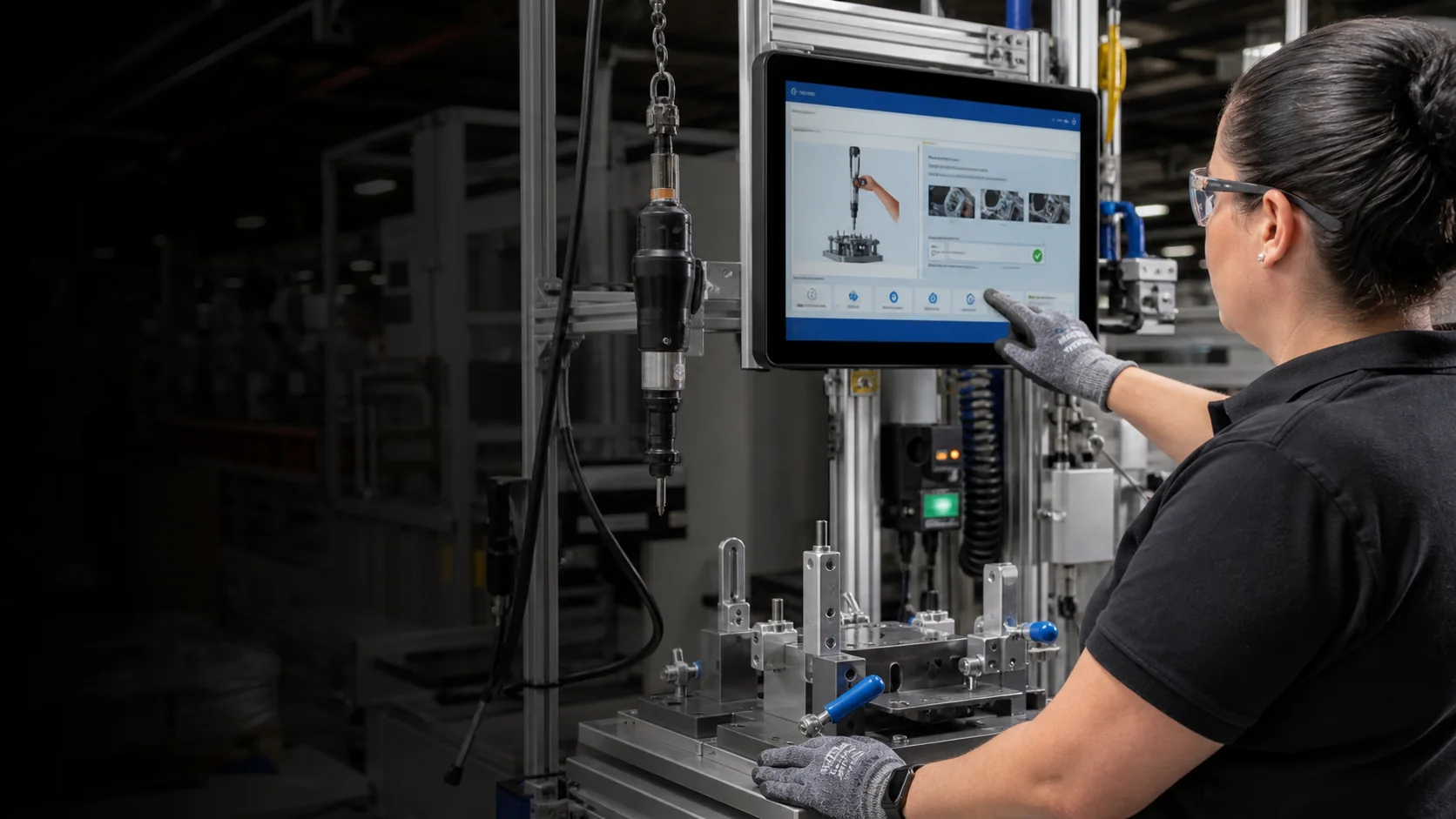
Digital shopfloor
Remove paper. Keep operational control.
Guide work, capture evidence and expose exceptions without adding another manual task.
Paper is often a symptom, not the root problem.
Digitization only creates value when instructions, data capture, system context and exception handling form one usable workflow.
Duplicate entry
Operators record the same information on paper, in a spreadsheet and again in MES.
Late evidence
Quality and production teams see issues after the shift, batch or order has moved on.
Uncontrolled instructions
Workstations use outdated documents or depend on local knowledge to choose the right version.
Operator friction
Generic forms interrupt work and capture fields that are not useful at the point of execution.
The workflow follows the real operation.
Digital execution combines system context, machine data and human decisions at the workstation.
Process observation
Work sequence, decisions, evidence, variants, interruptions and informal recovery practices.
Workflow design
Guided steps, dynamic instructions, validation, approvals and exception capture.
System context
Order, product, routing, serial number, tools, material and quality status.
Connected evidence
Machine results, measurements, checks, signatures, defects and comments.
Operational visibility
Current state, blocked work, missing inputs and actionable exceptions.
Controlled rollout
User validation, training, support procedures and deployment pattern for additional stations.
Design for the operator and the evidence chain.
The best interface reduces decisions that software can make, while making critical human decisions clear and traceable.
Choose one paper-heavy operation.
Map what the operator does, what systems already know and what evidence the business needs.